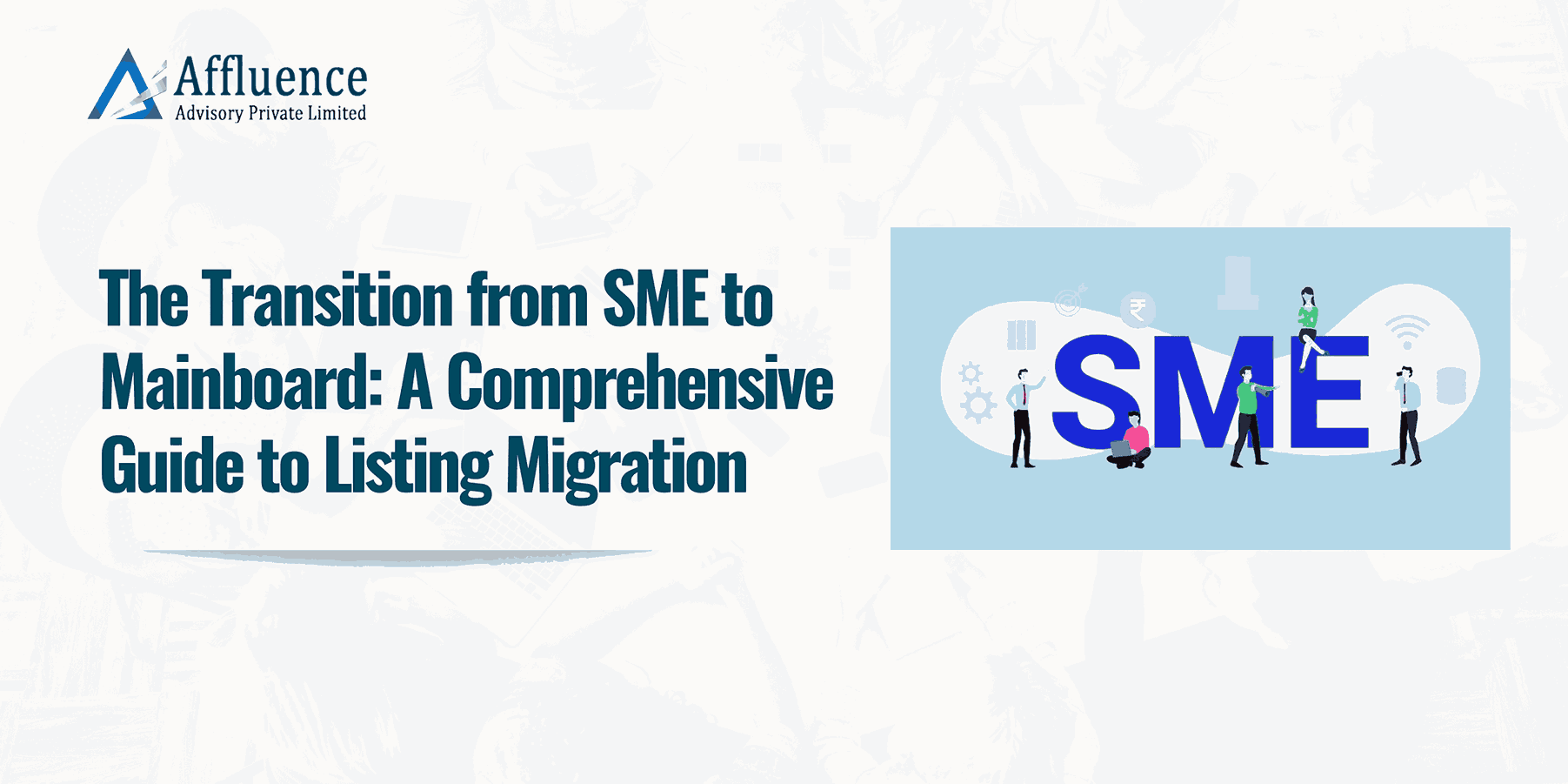
The journey from being a Small and Medium Enterprise (SME) to becoming a main board listed company is a significant milestone in the lifecycle of any business. It represents a company’s growth, maturity, and ability to meet stricter regulatory, financial, and corporate governance standards.
This migration is not a simple procedural shift; it requires meticulous planning, strategic adjustments, and a fundamental transformation of the company’s operational and governance framework. In this article we will explore the motivations, benefits, challenges, and step-by-step process involved in migrating from an SME board to the Mainboard of a stock exchange.
Benefits of migration from SME to mainboard
- Enhanced Visibility and Credibility : Mainboard listing elevates the company’s profile, attracting institutional investors, analysts, and media attention. This heightened visibility translates to increased credibility with customers, suppliers, and partners.
- Reflects company’s growth: It signals to investors, customers, and competitors that the company has reached a level of maturity and is ready to compete on a larger stage.
- Access to Larger Capital Pools: The Mainboard offers access to a broader and deeper pool of capital, enabling the company to fund expansion plans, acquisitions, and research and development initiatives.
- Improved Liquidity: Shares listed on the Mainboard are generally more liquid, facilitating easier trading and providing existing shareholders with a readily available exit option.
- Attracting and Retaining Talent: Listing on the Mainboard enhances the company’s reputation, making it more attractive to top talent.
- Increased Shareholder Value: Successful migration can lead to an increase in the company’s share price, benefiting existing shareholders.
- Increased investor confidence: Adhering to mainboard listing requirements forces companies to adopt robust governance practices, which can improve operational efficiency and investor confidence.
- Valuation Benefits: Companies listed on the Mainboard often enjoy better valuation multiples due to their perceived stability and compliance with higher regulatory standards.
- Wider investor base: Listing on mainboard platforms attracts a wider investor base, including institutional and non-institutional or retail investors, providing greater access to capital for expansion.
- No Market Makers: Companies moved to the mainboard witness high trading volume and thus liquidity increases and does not require any market making arrangements.
Criteria for migration from SME to mainboard
The transition from an SME platform to the Mainboard is subject to stringent eligibility criteria set by the stock exchange and regulatory authorities. Each stock exchange has specific eligibility criteria for migration, but common requirements include:
- Financial Performance: Companies must meet minimum revenue, profitability, and net worth thresholds.
- Minimum Operating History: A proven track record of profitable operations over a specified period.
- Minimum Paid-Up Capital: A substantial base of equity capital.
- Shareholding Requirements: Sufficient public shareholding and free float as per Mainboard regulations.
- Compliance with Corporate Governance Standards: Adherence to robust governance practices, including independent directors, audit committees, and transparent disclosure policies.
- Compliance with Listing Rules: Adherence to the specific listing rules of the Mainboard, which are typically more stringent than those for SME platforms.
BSE SME migration to mainboard – Eligibility Criteria
| Criteria | Requirement |
|---|---|
| Paid-up Capital | More than ₹10 Crores |
| Market Capitalization (Average) * | Minimum ₹100 Crores |
| Promoter Holding | Minimum 20% of equity share capital |
| Profitability |
|
| Net Worth | Minimum ₹1 Crore in each of the preceding 3 years (restated & consolidated) |
| Listing Track Record | Listed on SME Exchange for at least 3 years |
| Regulatory Actions |
|
| Public Shareholders | Minimum 1,000 public shareholders (latest shareholding pattern) |
| Insolvency and Bankruptcy Code (IBC) & Defaults |
|
| Utilization of Funds | Certification by a SEBI-registered credit rating agency for IPO or further fund utilization |
| Investor Complaints (SCORES ID) | No pending investor complaints |
| Cooling-off Period |
|
| Lock-in of Promoter/Group Shares | 6 months from listing on BSE (Not applicable for SME migration to Main Board) |
| Promoter Shareholding | 100% in demat form |
| Market Liquidity Requirements (New) |
|
| Net Tangible Assets |
|
| Business Consistency | Same line of business for 3 years |
* Calculation of average market capitalization = Aggregate of daily market capitalization on all trading days in the last 6 months /Total number of trading days during the same period.
** To calculate average, take the total turnover (or total trades) on all the days the stock was traded in the last 6 months, and divide it by the total number of trading days in that period.
NSE SME migration to mainboard – Eligibility Criteria
| Criteria | Requirement |
|---|---|
| Paid-up Capital | Minimum ₹10 Crores |
| Market Capitalization* | Minimum ₹100 Crores |
| Profitability |
|
| Listing Track Record | Listed on SME Exchange for at least 3 years |
| Net worth | At least ₹75 crores (as per SEBI guidelines). |
| Other Listing Conditions |
|
| Public Shareholders | Minimum 500 public shareholders on the date of application. |
| Additional Requirements |
|
| NSE’s Right to Reject Applications |
|
| Revenue from operations | Greater than ₹100 crores in the last financial year |
| Promoter and Promoter Group Holding |
|
* Market capitalization to be calculated based on the average price over the last 3 months.
Challenges for SMEs Migrating to Mainboard
Though migration brings in numerous benefits to SMEs it also comes with regulatory challenges with stricter SEBI oversight and governance.
- Increased regulatory compliance: Mainboard companies have comparatively stricter regulatory requirement than SMEs. SEBI and the mainline stock exchange have stringent regulatory norms such as filing quarterly reports, audited annual reports, and corporate events i.e., buyback, rights issues, etc.
- High financial costs: SMEs preparing for migration have to pay the initial listing fee, legal fees, accounting fees, and annual listing fee. So the compliance cost will be high for SMEs migrated to the mainboard exchange.
- Operational pressure: Companies listed on the mainboard exchange are subject to increased scrutiny by investors, analysts, and media, which can put pressure on the company to deliver consistent financial results. Any non-compliance or violation practices can halt a business’s reputation.
- Governance and control: The governance standards may require companies to change in board composition or structure such as creating independent boards, audit committees, etc. Also, institutional investors with majority stakes can impact business decision-making.
- Market conditions: Market volatility or negative investors’ sentiments at the time of migration can impact listing success. So, analyze the market to choose the right time for successful migration.
Disclaimer: This article provides general information existing at the time of preparation and we take no responsibility to update it with the subsequent changes in the law. The article is intended as a news update and Affluence Advisory neither assumes nor accepts any responsibility for any loss arising to any person acting or refraining from acting as a result of any material contained in this article. It is recommended that professional advice be taken based on specific facts and circumstances. This article does not substitute the need to refer to the original pronouncement.
CLICK HERE TO DOWNLOAD PDF