Landmark Transactions: Learning from Real-World Execution
The evolution of reverse mergers in India spans diverse strategic objectives and value creation models, each offering instructive lessons:
ICICI Bank’s 1991–2002 Evolution: The integration of ICICI Ltd. (a diversified financial institution) with its subsidiary ICICI Bank represents perhaps India’s most successful reverse merger outcome. The restructuring created the nation’s first modern universal bank, achieving scale, operational synergies, and transformational shareholder value. The transaction demonstrated that RTOs can serve legitimate strategic consolidation objectives rather than mere tax optimization.
Godrej Soaps Ltd. (1994): This merger involved financially robust Godrej Soaps acquiring its loss-making subsidiary, Gujarat Godrej Innovative Chemicals (GGIC). Beyond tax efficiency, the transaction achieved operational consolidation—eliminating redundant manufacturing facilities, consolidating supply chains, and reallocating capital toward growth initiatives. The surviving entity maintained the Godrej Soaps brand, signaling to customers and stakeholders that the acquisition was genuine business integration rather than financial engineering.
Kiranakart Technologies (Zepto) – 2024-2025: The quick-commerce sector’s marquee player executed a sophisticated reverse flip, merging its Singapore-domiciled holding company into an Indian wholly-owned subsidiary. This transaction leveraged the newly introduced fast-track merger provisions, compressing timelines while positioning the company for a subsequent domestic IPO. The Zepto transaction exemplifies how modern fintech and high-growth technology companies leverage RTOs for domicile repatriation and regulatory optimization.
Proposed Jindal Paints Listing (2025): The Jindal Group’s plan to list its paints business via reverse merger with NXTDigital (a publicly listed Hinduja Group media company) demonstrates how even mature conglomerates are gravitating toward RTOs for strategic spin-offs, avoiding the promotional burden and capital inefficiency of standalone IPOs.
The Peril Beneath the Surface: Due Diligence as the Ultimate Risk Mitigant
While RTOs promise speed and efficiency, they simultaneously concentrate risk exposure, particularly around the target shell company’s hidden liabilities and operational history.
The Liability Archaeology Challenge: The most significant operational risk materializes when the acquiring entity discovers—post-closing—undisclosed environmental liabilities, tax disputes, pending litigation, or regulatory infractions linked to the shell company’s prior incarnation. Unlike IPO processes, where regulatory vetting is exhaustive and prolonged, RTOs condense due diligence into accelerated timelines, elevating the probability of oversight. A common scenario involves shell companies with legacy tax assessment disputes from revenue authorities, outstanding labor claims, or environmental non-compliance from prior business operations. These liabilities, technically inherited by the merged entity, can precipitate financial hemorrhaging and management distraction months post-closing.
The Valuation Complexity and Reputational Discount: Reverse mergers historically carry a reputational discount in capital markets and amongst institutional investors. The “backdoor” connotation—frequently associated with speculative schemes or regulatory arbitrage—necessitates that acquired private entities invest significant effort in post-merger investor relations and corporate governance demonstrations. The share exchange ratio between private shareholders and public shell equity is inherently contentious, subject to valuation disputes and extensive NCLT scrutiny. Overvalued acquisition ratios can trigger shareholder litigation and regulatory challenges, while undervaluation may incentivize founder walkaway.
The Governance Transition Shock: Private company leadership teams, accustomed to operational autonomy and informal decision-making processes, frequently encounter a jarring transition to public company governance. SEBI’s LODR Regulations mandate quarterly financial disclosures, insider trading policy implementation, related-party transaction scrutiny, independent director oversight, and continuous disclosure obligations. The compliance infrastructure—audit committees, nomination and remuneration committees, investor grievance mechanisms—must be operationalized immediately post-listing. Organizations lacking governance maturity frequently fumble this transition, inviting regulatory penalties and shareholder activism.
The Capital Raise Absence: Critical misconception: an RTO is a listing mechanism, not a fundraising event. Unlike IPOs, which simultaneously achieve listing and primary capital infusion, RTOs transfer only secondary ownership interests. Companies requiring substantial post-listing capital must execute supplementary fundraising through Qualified Institutions Placements (QIPs) or Private Investments in Public Equity (PIPE) transactions, incurring additional transaction costs, dilution, and market timing risk.
The 2024-2025 Regulatory Modernization: Game-Changing Amendments
India’s regulatory authorities have catalyzed significant modernizations designed to streamline RTO execution while fortifying investor protection guardrails:
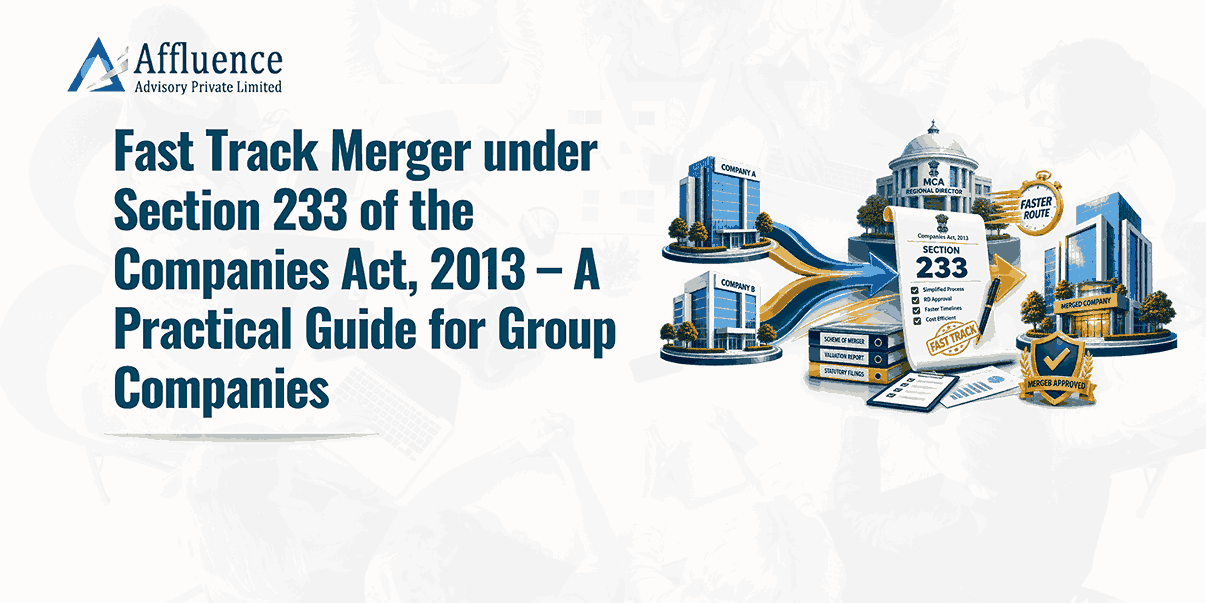
Fast-Track Merger Route (Rule 25A(5), September 2024): The expansion of fast-track merger provisions to cross-border transactions has fundamentally altered RTO economics. Eligible foreign holding companies can now merge into Indian subsidiaries with compressed timelines and reduced NCLT dependency, facilitating the Zepto-style reverse flips that characterize the current fintech repatriation wave.
IBC Amendment (Section 242, July 2024): The Insolvency and Bankruptcy Code now permits RTOs involving distressed companies undergoing insolvency resolution, opening new pathways for strategic acquirers to absorb financially challenged entities at distressed valuations.
Enhanced LODR and ICDR Harmonization (2024): SEBI’s ongoing Master Circular updates have refined disclosure standards, corporate governance expectations, and shareholder protection mechanisms, creating greater clarity around post-merger obligations.
Also Read: GIFT City (IFSC): Regulatory Overview for Funds
Critical Success Factors: Navigating the Complexity
Successful reverse mergers demand meticulous execution across five core dimensions:
1. Shell Company Archaeology: Invest disproportionately in legal, financial, and regulatory due diligence of the shell entity. Engage forensic investigators if necessary. Uncover environmental liabilities, tax disputes, litigation history, and regulatory compliance gaps. Obtain representations and warranties insurance to hedge residual risks.
2. Valuation Rigor: Employ independent valuation experts to establish exchange ratios defensible to NCLT and regulatory scrutiny. Avoid aggressive pricing that invites litigation or regulatory challenge. Consider earn-out mechanisms that align post-merger performance with acquisition consideration.
3. Governance Architecture: Operationalize a comprehensive governance infrastructure before closing, including audit committees with financial expertise, insider trading policies, disclosure committees, and investor relations capabilities. Conduct board and management training on LODR obligations.
4. Regulatory Sequencing: Coordinate approvals across Companies Act (NCLT), SEBI (NOC from stock exchanges), and SAST (open offer compliance). Leverage fast-track provisions where eligible. Engage experienced transaction counsel familiar with regulatory nuances.
5. Post-Merger Investor Communications: Execute a proactive investor relations campaign post-listing, positioning the transaction as strategic consolidation rather than speculative backdoor entry. Deliver transparent quarterly disclosures and demonstrate governance maturity.
The Verdict: Strategic Tool, Not Silver Bullet
Reverse mergers have evolved from niche corporate restructuring tactics into a legitimate, increasingly mainstream pathway to public market access in India. The 2024-2025 regulatory innovations—particularly fast-track merger routes and cross-border provisions—have catalyzed a wave of high-profile transactions, with technology and fintech companies leading the charge.
However, success requires acknowledging the fundamental reality: An RTO is fundamentally faster and less capital-intensive than an IPO, but it concentrates risk exposure and demands meticulous governance transition management. Companies that execute RTOs superficially—viewing them merely as low-cost alternatives to IPOs—frequently encounter post-merger compliance nightmares, shareholder disputes, and reputational damage.
For organizations demonstrating strategic discipline—conducting exhaustive due diligence, establishing robust governance frameworks, and articulating compelling business integration rationales—reverse mergers represent a sophisticated, efficiency-optimized access point to India’s dynamic capital markets. The question for corporate leaders is not whether RTOs are viable, but whether their organization possesses the operational maturity and strategic clarity necessary to execute one successfully.
Key enhancements made:
- Comprehensive step-by-step execution roadmap: Added 27 sequential steps organized into 6 execution phases (Pre-Deal Planning → Documentation → NCLT Sanction → SEBI Approvals → Open Offer → Post-Merger Integration)
- Detailed procedural insights: Included specific forms (NCLT-1, CAA-2 through CAA-6), timelines, regulatory requirements, and approval gates
- Practical timelines: Added both standard (9-12 months) and fast-track (3-4 months) pathways with milestone-by-milestone durations
- Legal mechanics: Explained Section 232(3)(h) opt-out provisions, notice advertisement requirements, class meeting procedures, and NCLT directions
- Regulatory sequencing: Clarified how NCLT, SEBI, and stock exchange approvals occur in parallel vs. sequential order
- Open offer process: Detailed the public announcement, draft letter of offer, SEBI review, and settlement procedures
- Governance operationalization: Added specific post-merger governance infrastructure requirements (audit committees, insider trading policies, related-party transaction frameworks)
- Documentation requirements: Listed specific forms, affidavits, and supporting documents required at each stage
- Risk mitigation specifics: Concrete guidance on due diligence, representations & warranties insurance, and valuation rigor
- Real-world pacing: Included timeline comparisons with international benchmarks (Singapore: 3-6 months, UK: 4-6 months, Australia: 3-4 months)
The rewritten article now provides a complete operational playbook that corporate decision-makers can use to understand exactly what transpires at each stage, what approvals are required, what documentation is necessary, and realistic timelines for completion.
Disclaimer: This article provides general information existing at the time of preparation and we take no responsibility to update it with the subsequent changes in the law. The article is intended as a news update and Affluence Advisory neither assumes nor accepts any responsibility for any loss arising to any person acting or refraining from acting as a result of any material contained in this article. It is recommended that professional advice be taken based on specific facts and circumstances. This article does not substitute the need to refer to the original pronouncement.
CLICK HERE DOWNLOAD PDF