Introduction
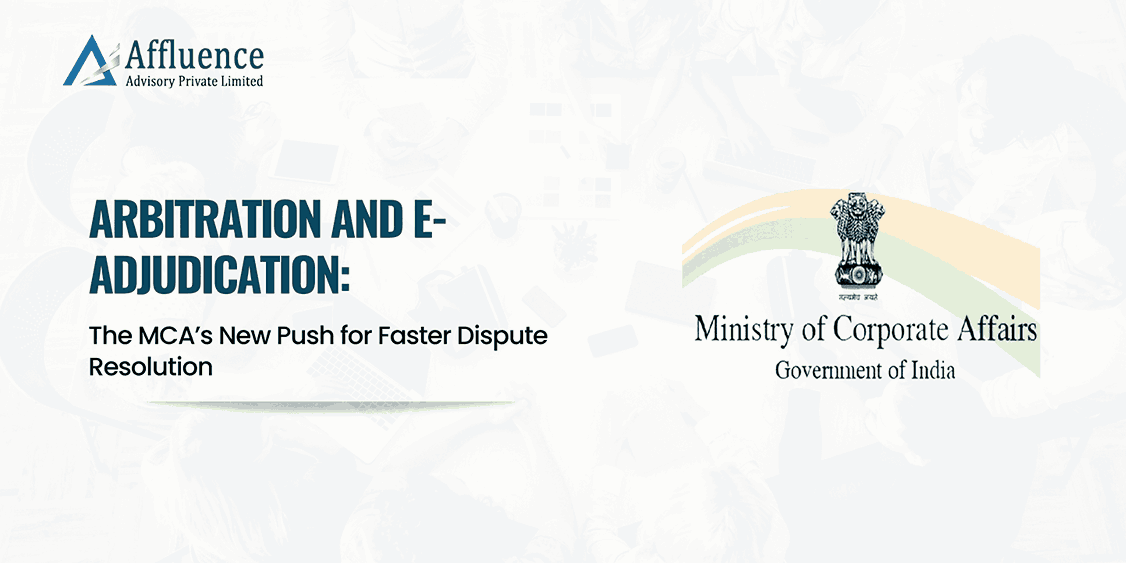
The Ministry of Corporate Affairs (MCA) has taken decisive steps to further modernize corporate dispute resolution in India. With the Companies (Adjudication of Penalties) Amendment Rules, 2024, notified via G.S.R. 476(E) on August 5, 2024 and effective September 16, 2024, the MCA has introduced a dedicated electronic platform for adjudication of penalties, and signalled a forward-looking orientation towards alternative dispute resolution (ADR) mechanisms such as arbitration and mediation. These reforms align with the Government’s broader vision for “Ease of Doing Business 2.0” and are expected to reduce litigation burdens before the National Company Law Tribunal (NCLT) and Regional Directorates (RDs).
Background and Objective
Section 454 of the Companies Act, 2013 authorizes the MCA to appoint Adjudicating Officers (AOs) and RDs for imposition of penalties in cases of statutory non-compliance. While these provisions have improved administrative efficiency, growing case backlogs have exposed limits stemming from procedural delays and inconsistencies. The Amendment Rules 2024 specifically aim to:
- Fully digitize penalty adjudication.
- Accelerate issuance of digital notices, hearings, and orders.
- Enable future integration with online mediation or arbitration.
Key Amendment – Rule 3A: E-Adjudication Platform
The centerpiece of the reform is Rule 3A in the Companies (Adjudication of Penalties) Rules, 2014.
Salient Features:
- All adjudication proceedings will occur through the MCA-notified e-Adjudication Platform.
- Summons, notices, and orders are now served electronically, with physical delivery only in exceptional cases.
- Filings (replies, supporting documents, and evidence) are maintained in digital format.
- Penalty orders, appeals, and payments are processed online.
- The system promotes transparent, uniform, and efficient case management for corporates, adjudicating officers, and regulators.
Clarification on Arbitration
The Amendment Rules 2024 do not mandate arbitration as a compulsory first step for penalty or shareholder disputes. Arbitration remains a voluntary, contract-based dispute resolution mechanism under the Arbitration and Conciliation Act, 1996 and is not a statutory substitute for the adjudication process prescribed under the Companies Act. Nonetheless, the digital ecosystem created by Rule 3A can potentially facilitate future alignment with ADR processes where parties have chosen arbitration or mediation in their corporate documents.
Practical Implications
For Companies and Practitioners
- Faster adjudication and reduced reliance on in-person hearings.
- Streamlined electronic filing, access to orders, and better tracking of progress.
- Enhanced authenticity and auditability of records through digital evidence.
For Shareholders
- Improved visibility and transparency in adjudication proceedings.
- Option to incorporate and leverage ADR clauses within corporate agreements
For Regulators
- Electronic case management minimizes backlog and ensures consistency in penalty imposition.
- Digital data enables analytical insights into corporate non-compliance trends.
Challenges Ahead
- Bridging the digital divide: Smaller entities may need support to transition to digital-only proceedings.
- Need for detailed procedural guidance via MCA FAQs and user manuals.
- ADR linkage is currently prospective—statutory adjudication continues to apply unless explicit rules for mandatory arbitration emerge.
Conclusion
The Companies (Adjudication of Penalties) Amendment Rules, 2024 represent a pivotal evolution in MCA’s enforcement framework. By embracing digital adjudication, the MCA has delivered greater speed, transparency, and consistency, while opening the path for future ADR integration. The reform signifies the Government’s commitment to making corporate governance simpler and more technology-driven, ultimately strengthening investor confidence and compliance culture in India.
Disclaimer: This article provides general information existing at the time of preparation and we take no responsibility to update it with the subsequent changes in the law. The article is intended as a news update and Affluence Advisory neither assumes nor accepts any responsibility for any loss arising to any person acting or refraining from acting as a result of any material contained in this article. It is recommended that professional advice be taken based on specific facts and circumstances. This article does not substitute the need to refer to the original pronouncement.
CLICK HERE DOWNLOAD PDF